
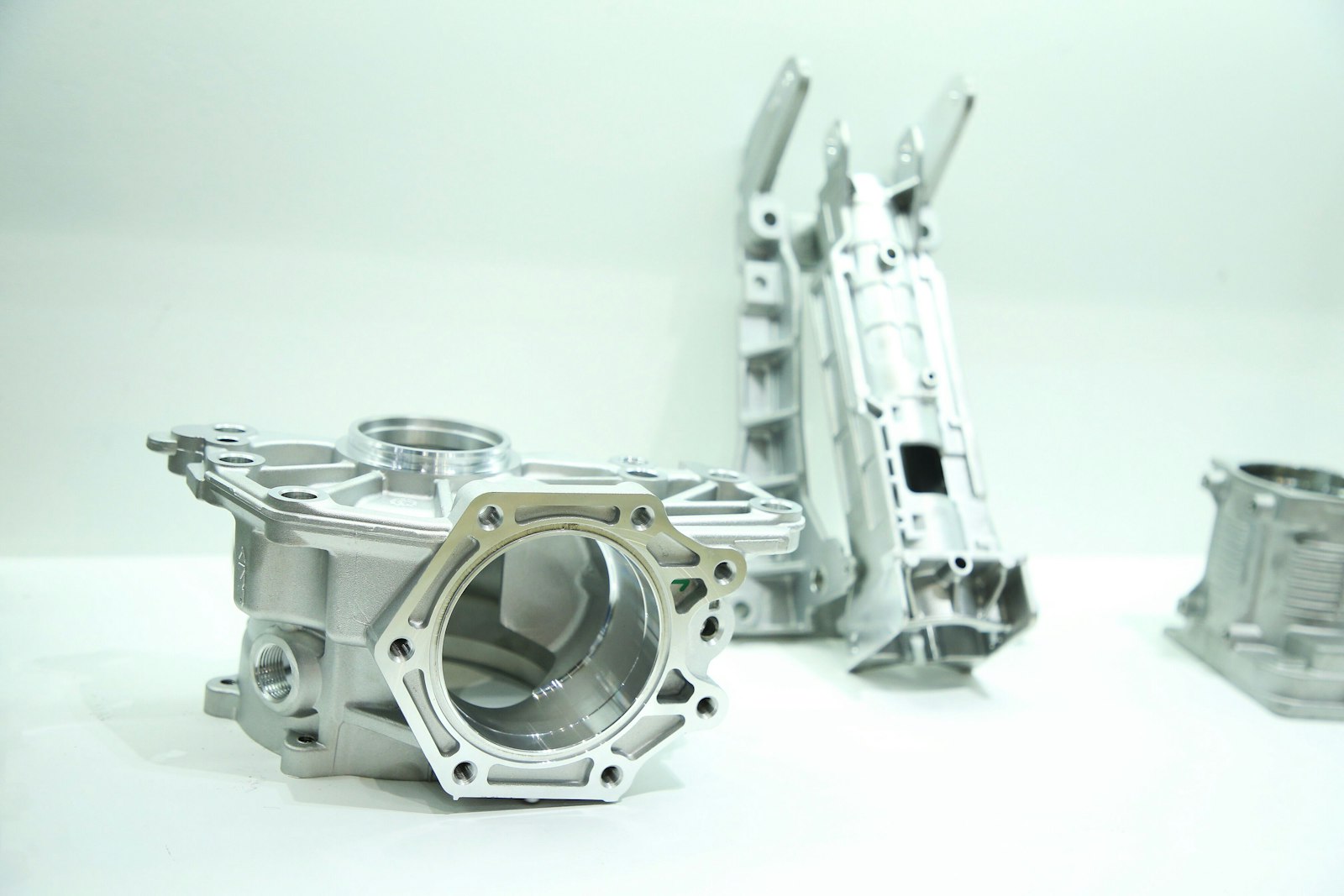
Aluminium is a very reactive metal and therefore requires a surface treatment to protect it from wear and corrosion. Anodising converts the outer surface of the Aluminium into a hard Aluminium Oxide layer.
In short: Anodising gives a protective layer to aluminium, as opposed to applying a surface coating. The anodised layer is part of the metal itself, and therefore cannot peel or flake off. With hard anodising, the layer can be made very hard, reaching 600 HV or more. After anodising, the anodised layer is sealed against moisture. The thickness of the anodised layer can be increased for heavy-wear parts. The alloy itself is also of importance, as some alloys anodise far more evenly than others.
A Hard Surface That Resists Scratching

Photo by Diecasting Mould on Unsplash
The surface hardness of anodised surfaces can reach values of up to 600 HV or more using hard anodising techniques. In comparison, typical values for aluminium range from below 100 HV down to 10 HV, which highlights the substantial wear resistance offered by anodised surfaces for specific applications.
Bonded to the Metal, Not Sitting on Top
Anodised coatings are very different from painted or electroplated coatings. Firstly, rather than applying a coating to the surface of the metal, the anodised coating is grown into the surface of the metal. Therefore, there are no interfaces within the coating that can delaminate, crack away from the substrate, or allow moisture to penetrate to the metal surface below.
Sealing Closes the Pores Against Moisture
Freshly anodised aluminium surface has a porous oxide structure which will penetrate into the material and absorb moisture and contaminants. This can be sealed using a number of methods, for example, Hot deionised water sealing or Nickel Acetate sealing. Sealing of the anodised surface is as important as the thickness of the oxide layer for corrosion critical applications.
Oxide Thickness and Protection Level
Thick anodising layers are typically around 25-100 microns and are used for heavy wear parts, hydraulic components, etc. They can also offer resistance to corrosive chemicals.
For Anodising, visit https://www.poeton.co.uk/surface-treatments/anodising.
Alloy Grade Affects How Well It Anodises
This does not mean that all aluminium alloys can be anodized equally well. The 1000 and 6000 series of aluminium alloys produce consistent, high-quality oxide layers. However, there are many other aluminium alloys (e.g., high-silicon casting alloys and certain 2000-series alloys containing copper) that can produce an uneven, thin oxide layer. For applications where corrosion resistance is critical, it is very important to consider the alloy specification along with the anodizing specification.
Getting the correct specifications for the alloy, the thickness of the oxide layer and the type of sealing used is crucial for achieving the desired levels of wear resistance and corrosion protection for parts made from anodized aluminium.
Related reading: Four Types of Anodising
FAQs
Can anodised aluminium be coloured?
Yes. Before sealing, the porous oxide layer can absorb dyes, which is how coloured anodised finishes are made. Sealing then locks the colour into the surface, so it does not chip off the way paint can.
Does anodising change the size of a part?
Slightly. Part of the oxide layer grows outward from the original surface and part grows inward, so dimensions increase by a fraction of the total coating thickness. For precision parts and threads, this growth needs to be allowed for in the design.
How should anodised aluminium be cleaned?
Use warm water with a mild, pH-neutral detergent and a soft cloth. Avoid strongly acidic or alkaline cleaners and abrasive pads, which can attack or dull the oxide layer.