
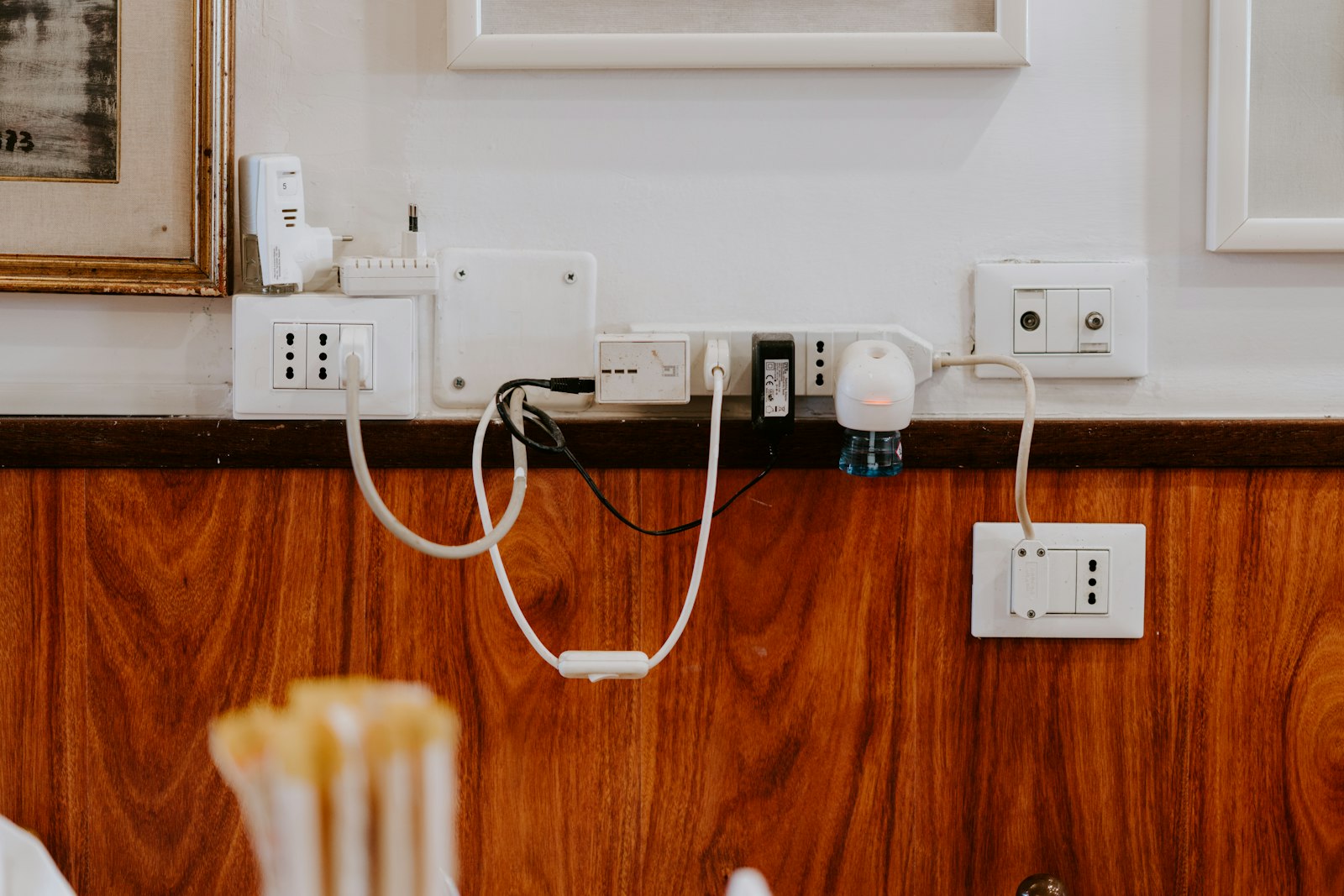
Most people do not think about their home’s electrics until something stops working. Problems with sockets, lights or extension leads often arise from mistakes made in the electrical system of the home, which have become habits long before they are noticed.
In short: Many household electrical problems are caused by a number of seemingly insignificant practices. This article covers four of the most common causes of electrical problems in the home including the over reliance on extension leads and adapters for daily tasks, ignoring warning signs that a problem may occur with electrical equipment such as flickering lights, unusual buzzing sounds, strange smells or warm power sockets, making alterations to electrical equipment or installations without sufficient knowledge, and allowing items to block power sockets and leads or be placed in close proximity to water. Spotting these early keeps a home and the people in it safer.
Relying on Extension Leads and Adapters

Photo by Claudio Schwarz on Unsplash
One of the most common mistakes that people make regarding electrical connections is their reliance upon extension leads and adapters. These tools are useful in certain situations; however, relying upon them as a means of providing power to electrical appliances within an area can lead to unnecessary demands being placed upon the electrical sockets and cables that are utilised in those areas.
Ignoring Warning Signs
Another item to avoid within your home is ignoring warning signs from your electrical system. If you notice that your lights are flickering, if you hear buzzing sounds coming from your electrical system, if you smell unusual smells coming from your electrical system, or if you find that your sockets are warm to the touch, it is time to seek the help of an electrician to diagnose the problem with your electrical system. For an Electrician Cheltenham, contact www.dpalmerelectrical.co.uk/electrician-near-me/electrician-cheltenham/
DIY Alterations Without the Right Knowledge
If an individual attempts to change a fitting or make electrical alterations to the home without the knowledge required to perform such tasks, they are likely to encounter unexpected issues with the work that was performed on the home. These unexpected issues may lead to safety risks to the occupants of the home, as well as to other issues within the installation itself.
Clutter Around Sockets and Cables
Another hazard that can be present within a home is clutter. Clutter can lead to various hazards for people within the home. For instance, placing furniture against electrical outlets, hiding electrical cords beneath rugs and placing electrical equipment in areas that may become wet are all examples of how clutter can lead to various hazards for people within the home.
Related reading: Electrical Jobs You Should Leave To The Experts
FAQs
How many plugs can I safely use in an extension lead?
The limit is the lead’s current rating, not the number of sockets. Most UK extension leads are rated at 13 amps in total, so it is the combined load of everything plugged in that matters. High-power appliances such as kettles, heaters and tumble dryers should go straight into a wall socket, and extension leads should never be plugged into one another.
Which electrical work has to be certified?
In England and Wales, Part P of the Building Regulations covers electrical work in homes. Jobs such as adding a new circuit, replacing a consumer unit or working near a bath or shower are notifiable, so they should be done by a registered electrician who can self-certify the work, or signed off through building control. Different rules apply in Scotland and Northern Ireland.
How often should a home’s wiring be checked?
Electrical Safety First recommends an Electrical Installation Condition Report (EICR) at least every 10 years for an owner-occupied home. For privately rented homes in England, a check every five years is a legal requirement. It is also worth having one done when you buy a property.