
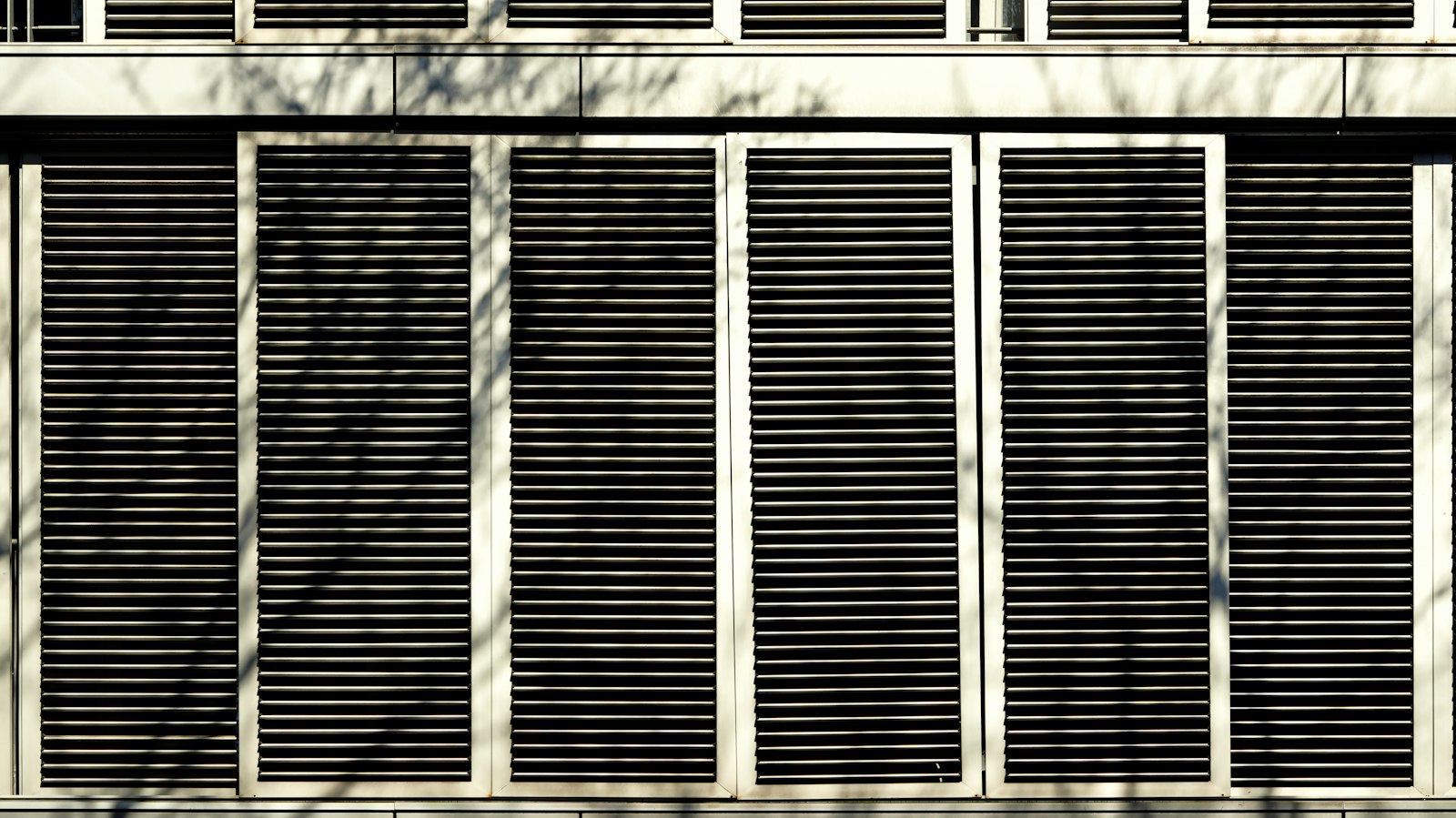
In addition to sunlight control, the physical structure of Brise Soleil systems can provide useful acoustic benefits. Many offices, schools and hospitals are located near roads and transport links and suffer from external noise. The acoustic benefits of Brise Soleil should be considered at the design stage.
In short: The louvres of a brise soleil, usually fitted for shading, can also be designed to help with external noise. The angle of the fins can scatter sound before it hits the glass. An air gap behind the fins can act as a sound buffer. Closer fin spacing will increase the sound protection near busy roads or railways. When combined with acoustic glazing, it adds an external layer of sound protection. It is worth bringing up early in the design stage for schools, hospitals and offices.
How Louvre Geometry Breaks Up Sound

Photo by boris misevic on Unsplash
By their nature the angles of the individual fins of a louvre array will split or deflect incoming sound waves. Instead of the sound being focused down onto a single layer of glazing the sound will now strike a number of surfaces in a focus, thus allowing the sound to be ‘scattered’ – thereby reducing the intensity of the sound pressure at the facade.
The Air Gap as a Buffer
The air space between the Brise Soleil louvres and building facade creates an additional sound barrier, with sound dissipated in this secondary buffer. This secondary sound barrier enhances the total sound reduction of a façade where the glazing already contributes significantly to sound attenuation.
Blade Density and Spacing
As the density of the fins increases so too does the amount of interaction that sound can have with the surfaces of the fins. Thus for noisy environments such as those near a dual carriageway or a rail line, a higher density of fins may be required. For further information on the use of louvres for noise reduction see the Institute of Acoustics’ reference material on how sound behaves around building facades.
Pairing With Acoustic Glazing
Adding a Brise Soleil system to acoustic glazing increases the overall sound reduction. The Brise Soleil can act as a first layer of sound reduction and the glazing then be designed to provide additional sound reduction. There is more on Brise Soleil at Alu Systems.
Buildings That Gain Most
A small additional cost to improve the internal environment of a school on a busy road, a hospital ward next to a car park or an open plan office near a rail line is worth considering at the design stage.
Related reading: The truth behind six replacement window myths
FAQs
Can brise soleil replace acoustic glazing?
No. The louvres help reduce the sound reaching the facade, but the glazing and wall construction do most of the work of keeping noise out. Brise soleil is best treated as an extra layer that supports a properly specified acoustic facade, not as a substitute for one.
Does brise soleil reduce daylight inside?
It can. The same louvres that block high summer sun also cut some daylight, so blade angle, depth and spacing need to balance shading, views out and natural light. Designers usually model this alongside solar gain when choosing a system.
Can brise soleil be added to an existing building?
Often, yes. Systems can be retrofitted to existing facades as long as the structure can carry the extra weight and wind loads. A structural engineer should confirm the fixing points before installation.