
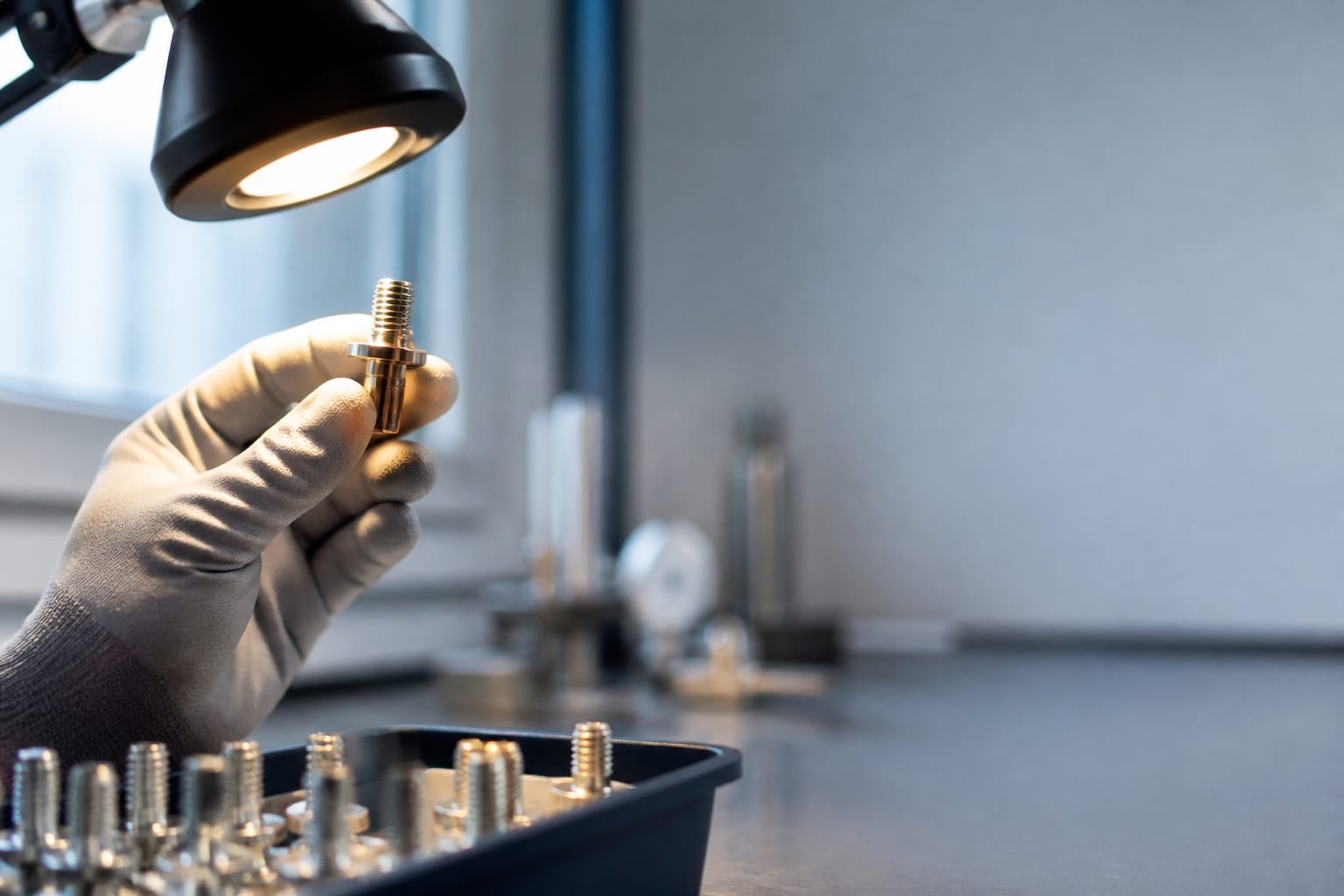
Plating products for Aerospace to prevent wear and corrosion but also introduce significant risk. This hidden risk is referred to as hydrogen embrittlement and can cause serious failure of high strength plated parts. It is therefore very important that the person specifying a product, purchasing a product or inspecting plated parts for aviation use has a good understanding of this subject.
What Hydrogen Embrittlement Actually Is
Hydrogen atoms form at the surface of the metal during the plating process and the various stages of pickling prior to coating. Some of these atoms will diffuse into the metal’s crystal lattice. Within the lattice the atoms collect at grain boundaries and at existing defects in the metal. As more hydrogen atoms enter the metal the internal pressure increases. In some cases the part may look perfectly normal and measure up to size but fail weeks or even months later under what seems to be a minor load. Most serious however is the delay between the causation of failure and actual failure which can be catastrophic.
Which Plating Processes Carry the Risk
Many finishing processes have differing effects on hydrogen generation and permeation. Some cathodic processes such as for cadmium, zinc plating and chrome plating are, as a result of their electrochemical process, prolific at generating atomic hydrogen at the work surface and, as a result, the metal is at risk of hydrogen permeation. However, the chemical reduction process used for electroless nickel plating is significantly less prone to generating free hydrogen thus is often specified for critical parts made from high strength steels. Most other processes are specified almost solely on appearance with little regard to the subsequent service properties of the plated part.
Which Materials Are Most Susceptible
Most metals are not equally sensitive to hydrogen embrittlement. Higher strength steels (above about 32 HRC) contain less structured metal and are therefore less able to withstand the internal stresses that hydrogen forms in the steel. The amount of hydrogen required to cause cracking in high strength steels decreases with increasing strength of the steel. Some titanium alloys are also sensitive to hydrogen embrittlement but by different failure mechanisms. Most other metals including lower strength steels and most aluminium types are not embrittled by hydrogen. Thus, in assessing risk of hydrogen embrittlement, the hardness and alloy type of the part under consideration must also be taken into account.
The De-Embrittlement Bake Explained
In order to try to prevent hydrogen embrittlement the parts are placed in an oven after plating. The parts are heated at a fixed temperature normally between 190°C and 220°C for a number of hours. The time and temperature depends on the material being plated and its strength. The heat from the oven increases the atoms’ kinetic energy allowing them to escape from the metal lattice as gas. This is an accepted method to try to remove hydrogen from plated parts, particularly high-strength aircraft components, and is a requirement of many plating processes’ specifications.
Why Bake Timing and Temperature Matter
The only way to be sure that embrittlement has been ‘cured’ by a bake is to ensure that the part has been baked within a few hours of plating (typically 4 hours for the most embrittler sensitive materials). By then, the hydrogen in the part will have reached a stable value and it is then relatively easy to remove all of it by a bake, provided that the part is then held at the bake temperature for a sufficient length of time (again typically several hours). To control this process is critical to compliance with the aviation safety regulations.
How Susceptibility Is Actually Proven
Of course, platers cannot see that embrittlement cracking is of a delayed nature and hidden at first. To test the susceptibility of parts for hydrogen embrittlement therefore notched test specimens of the same material and heat treatment as the parts to be plated are plated in the same way and then subjected to a sustained load until they crack or for a set period of time, typically 200 hours at a load of some percentage of the notched part’s notch strength in plan view. If the specimen resists cracking in such a test then all parts in the plating batch are deemed to be free of any embrittlement. If however they do crack then the plating of that batch of parts must be suspected of having caused them to become brittle and thus they must be inspected for any other defects and possibly even be destroyed.
Practical Controls That Reduce Risk
Many of the potential risks of a part can be controlled into the design. Sharp corners, tight radii and stress concentrations all can increase the susceptibility to hydrogen embrittlement. Therefore, it is good practice to limit the amount of pickling time and current density during the plating process. In addition, there are some processes which are of lower hydrogen risk than others. For example, the use of electroless nickel plating would be recommended for high strength parts. The criteria for these processes are outlined in the surface treatment standards maintained by the aerospace industry body in the UK, such as Aerospace Surface Treatments.
Why Bake Certificates and Traceability Matter
In terms of evidence of the completion of the de-embrittlement bake, a simple bake certificate is required which outlines the following information: date of plating, time parts were loaded into the oven, oven temperature, duration of bake and results of load tests on associated test pieces. For information on bake certificates and surface treatments see Aerospace Surface Treatments. For further information on recent aerospace coating research and the bake processes for new materials see Recent Aerospace Coating Research.
Though a slow process leading to an invisible failure, hydrogen embrittlement is also a well-understood process with a variety of methods to detect and control the effects of hydrogen embrittlement throughout the various process stages. Most issues are prevented by simply knowing what to ask for and when.